
Using AI to Diagnose My F-150's Intermittent Hyper-Flashing
There's a version of this story where I drop the truck at a dealer, describe a weird intermittent electrical thing, and get back a $400 diagnosis and a lecture about sensors. That's the old version. The new version involves me lying under the truck with a wrench and talking to an AI the whole way through.
AI isn't just a search engine replacement. When you're working through a problem with incomplete information, a good AI conversation is something different. It reasons with you, narrows possibilities as you add data, and catches things you'd miss alone. That's what happened here.
The Symptom
My 2023 F-150 had an intermittent problem. Every so often the blinker would hyperflash, blinking really fast, and then after a bit return to normal on its own. Not every time. Not always the same side. Just occasionally, and then gone.
I asked Claude about it.
The Initial Theory
Claude's first response was textbook: hyperflashing usually means a failing bulb. When a bulb starts to die, resistance drops, the circuit interprets that as a fault, and the blink rate speeds up as a warning. Intermittent fast-then-normal behavior fits a bulb on its way out.
It also flagged corroded sockets, bad grounds, and trailer wiring as other possibilities. Then it noted: 2023 F-150s use LED turn signals from the factory, so a burned-out bulb was less likely. More probable was a BCM issue or a loose connector.
The BCM Theory
I asked it to dig further. It surfaced something interesting. The F-150's Body Control Module is sensitive. LED bulbs draw far less power than the incandescent bulbs the BCM was originally calibrated for. It can interpret the low draw as a blown bulb and trigger hyperflash even when everything is actually fine. The system is working as designed. It's just aggressive about it with LEDs.
The common fix is a BCM reprogramming through FORScan, which many owners have done.
I told Claude I live in Southern California and doubted moisture was a factor. It agreed and narrowed the field to a loose connector or BCM issue. It suggested the dealer since the truck was likely still under warranty. I told it I was just going to leave it.
Then Things Got Interesting
While poking around I noticed something new. Neither rear turn signal seemed to be working at all. And the rear bulbs didn't look like LEDs.
I dropped the tailgate. They started working.
I slammed it shut. They came back on.
New data point. Claude immediately placed this: loose connector in the tailgate wiring harness. It's a known F-150 issue. A harness runs through the tailgate hinge area and flexes every time you open and close the gate. The connector can work itself loose over time.
I got underneath and shook everything. Lights worked fine until the tailgate dropped, at which point they'd go out. Whatever was failing was clearly stressed by that motion.
Then Claude pointed out something I'd glossed over. One wire taking out both rear lights simultaneously was suspicious. Individual bulb failures don't do that. Connector failures usually don't either. A shared ground does. One bad ground point and both sides go dark together.
I jiggled the two main harness connectors under the bed. No effect.
I told Claude: "it's actually the motion of slamming the tailgate."
Claude: "The tailgate is basically a percussion instrument at this point."
It walked me through systematic percussive diagnostics. Tailgate down with lights out, tap things methodically, start at the tail lights and work forward until the lights come back on. Wherever tapping restores the connection is where you look.
I mentioned that a shared ground still made the most sense. Claude agreed.
Found It
I went looking for the ground bolt in the rear of the frame. Found it. Loose.
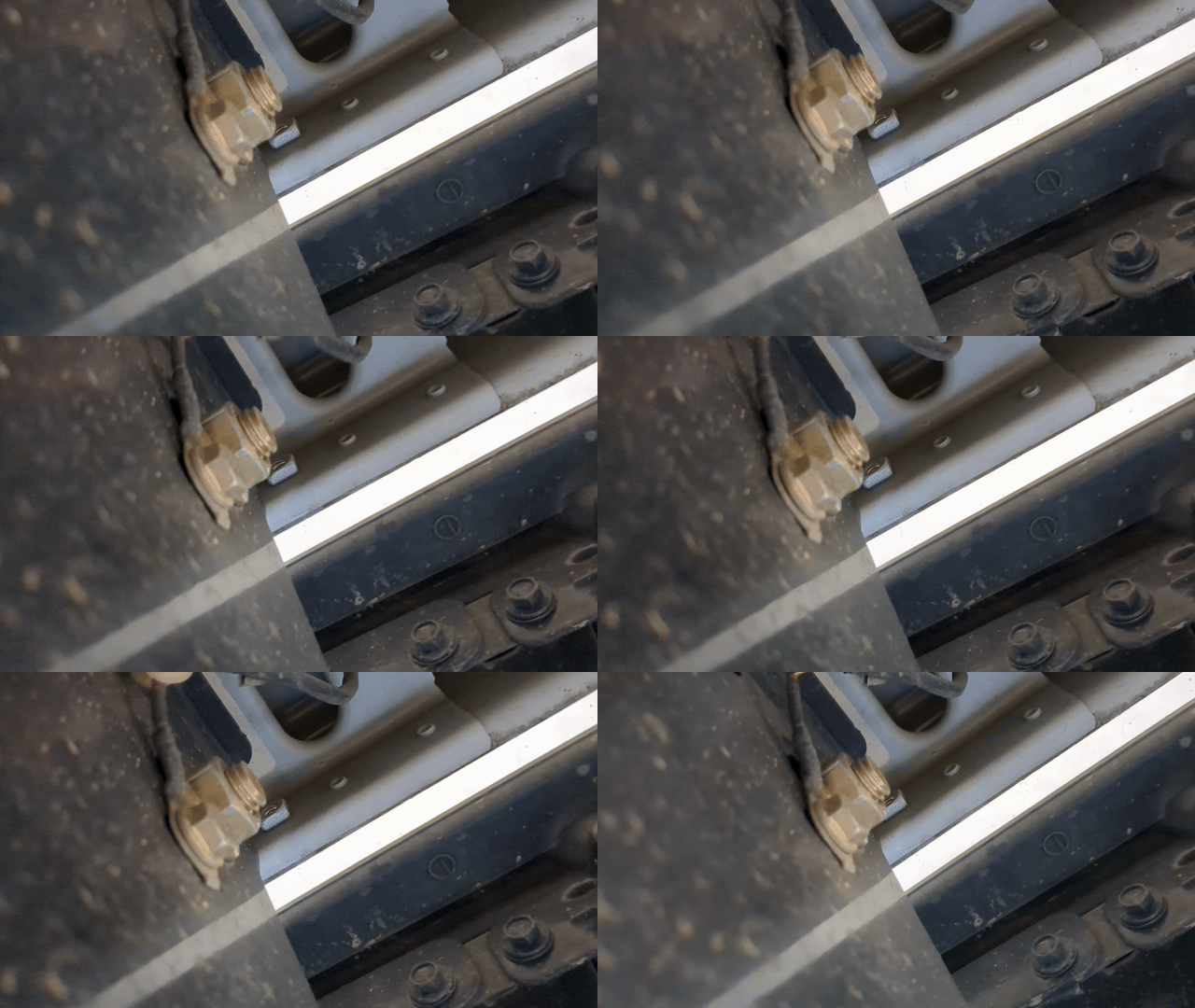
Tightened it down.
That one loose bolt explained two separate symptoms:
- The rear turn signals going out when the tailgate dropped
- The intermittent hyperflashing up front
The Backstory
A few months earlier I'd installed a CURT Class IV hitch. That install requires removing the factory ground bolt and reconnecting it with a new bolt. I torqued it to spec and figured I was done.
Fasteners in high-vibration areas don't always stay where you put them. Especially ones that were recently touched. The standard practice is to retorque after a break-in period, a few weeks of driving, and I didn't do that. The bolt slowly backed out just enough to cause trouble.
The lesson: if you've done any work near a ground point, add it to your retorque checklist a month later. It takes thirty seconds. Skipping it apparently costs you months of intermittent electrical weirdness.
All of this got resolved for the cost of a wrench turn. Claude gave me three specific places to check on the 2023 frame. The bolt was at one of them, visibly loose. No multimeter, no probing. Just looked at it and knew.